The Death of the Destination: How to Command Your Brand Reputation in the 93% Zero-Click Era
1. The 2026 Shift: Your Brand is No Longer Yours
The traditional marketing funnel hasn’t just leaked; it has been vaporized. As we move through 2026, we have transitioned definitively into the “Answer Engine” era. The data is jarring: 44% of users now expect immediate, generative responses, bypasssing the list of blue links entirely.
For the modern entrepreneur, the crisis is one of agency. Your brand is no longer defined by the high-gloss “About Us” page you spent thousands to design. Instead, your reputation is filtered through an “Algorithmic Lens”—a dynamic, high-speed synthesis generated by Large Language Models (LLMs) that scrape, interpret, and summarize your entire digital footprint to tell your story for you. If you aren’t managing the synthesis, you aren’t managing your brand.
2. The End of the Funnel: Why Synthesis is the New Search
Answer first: Yes, traditional search as we knew it is dead. The “link-centric” model has been cannibalized by a “synthesis-driven” paradigm where AI captures up to 93% of user attention in specialized “AI Modes.”
The numbers tell a story of total displacement. Traditional search volume is projected to plummet by 25% by the end of 2026. We are navigating a “zero-click” reality where 58.5% of searches never leave the results page. When an AI Overview appears, that zero-click rate surges to 83%.
“The primary representation of a brand is no longer found on its own ‘About Us’ page; it is instead a dynamic, algorithmic summary synthesized by Large Language Models that prioritize consensus over corporate copy.”
In this landscape, digital survival is no longer about “ranking” for a keyword; it is about “Presence in Answers.” If the AI doesn’t cite you, you don’t exist.

3. The Diagnostic: Decoding the AI’s “Internal Monologue”
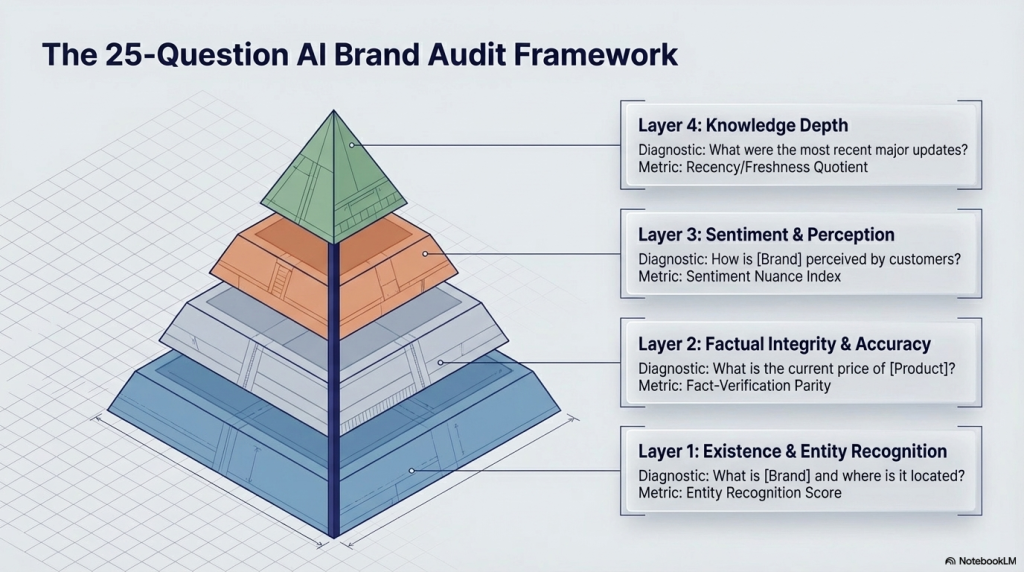
Answer first: AI perceives your brand through a four-layered diagnostic framework: Existence, Accuracy, Perception, and Depth.
To manage this, leaders must execute a 25-Question AI Brand Audit. Crucially, this audit must account for the “Beyond Fine” methodology. LLMs no longer just read words; they decode emotional triggers. When a customer review says a service was “fine,” the AI may interpret the underlying context as “annoyance” or “frustration,” factoring that into your brand’s “weakness” summary.
- Existence (Entity Recognition): Does the model acknowledge you as a distinct entity? If not, you face “Digital Invisibility.”
- Accuracy (Factual Integrity): Does the AI report the “ground truth”? Hallucinations regarding pricing or leadership derail the journey instantly.
- Perception (Sentiment Nuance): The AI synthesizes public discourse into an emotional characterization.
- Depth (Knowledge Gaps): Models often suffer from “Depth Gaps,” relying on data that is 6 to 18 months stale.
4. Stakeholder Analysis: The New Big Three and the Bing Backbone
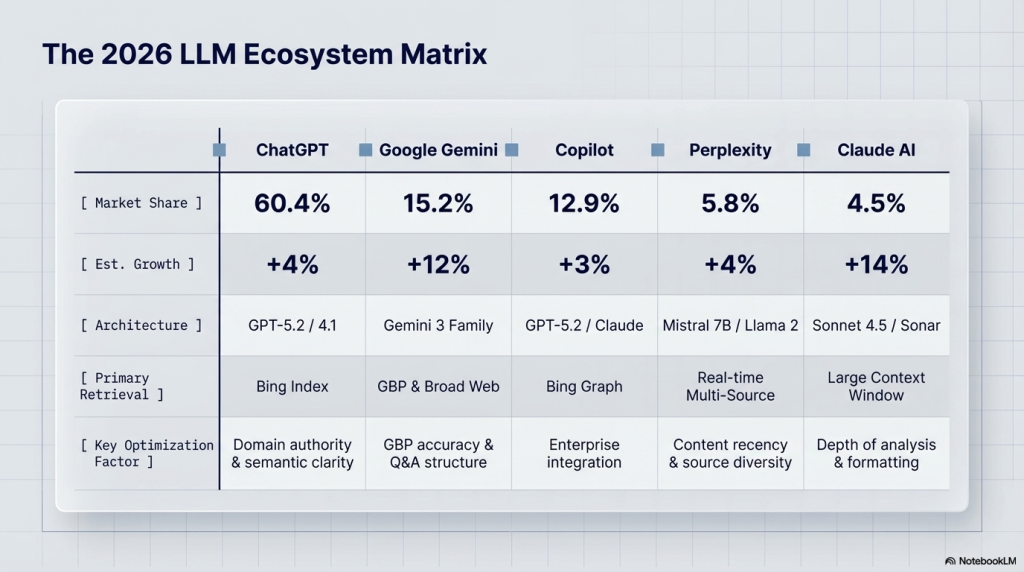
Answer first: ChatGPT remains the heavyweight champion with over 60% market share and 800 million weekly active users, but Google Gemini and Perplexity are gaining ground through ecosystem dominance and real-time recency.
A strategic consultant knows that “reputation” is platform-specific. Notably, ChatGPT Search utilizes the Bing Index for real-time retrieval. If your site isn’t optimized for Bingbot, you are invisible to the world’s most popular AI. To track this, high-leverage brands use specialized tools: Otterly.AI for citation-level tracking and Peec.ai for high-frequency (4-hour) updates in competitive verticals.
5. The Mothership Strategy: Why AI Trusts Strangers Over Your Marketing
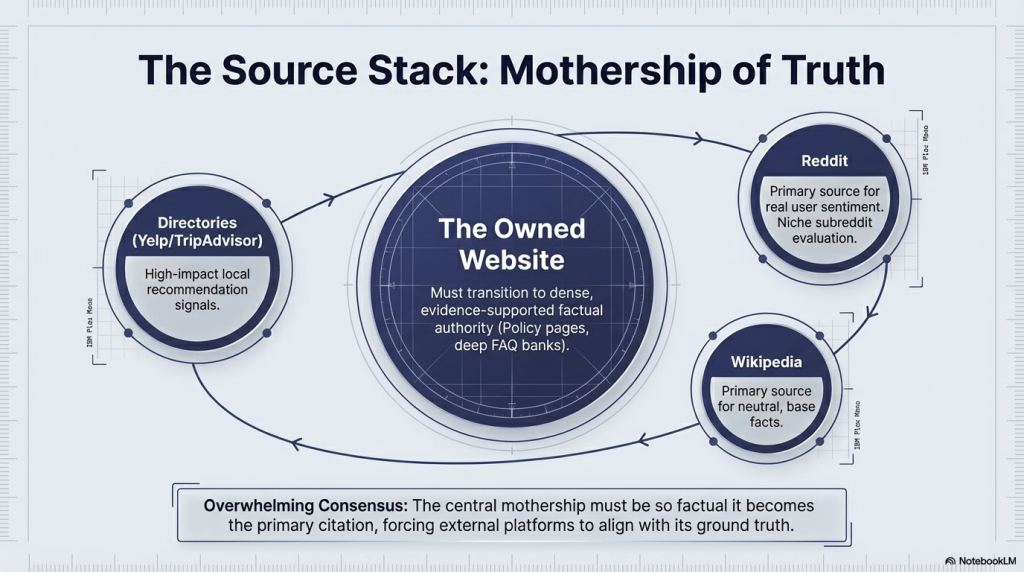
Answer first: Paradoxically, Reddit and Wikipedia are now more influential than your own website. AI models prioritize “balanced honesty” and “collective wisdom” over corporate PR.
AI treats the “Source Stack” as a hierarchy of truth. Your goal is the “Mothership of Truth Strategy”: making your official website so data-rich, transparent, and evidence-supported that the AI begins to cite you over third-party community platforms.
6. Remediation: The 180-Day War Against Algorithmic Hallucinations
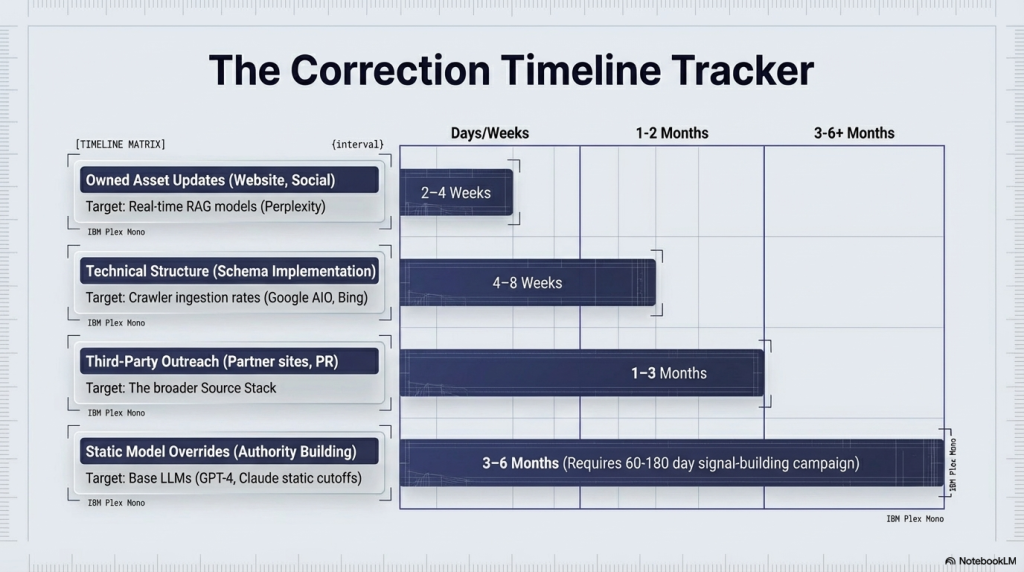
Answer first: You cannot “edit” an LLM. You must influence it through a persistent, 60-to-180-day “omnichannel correction” workflow designed to create an overwhelming digital consensus.
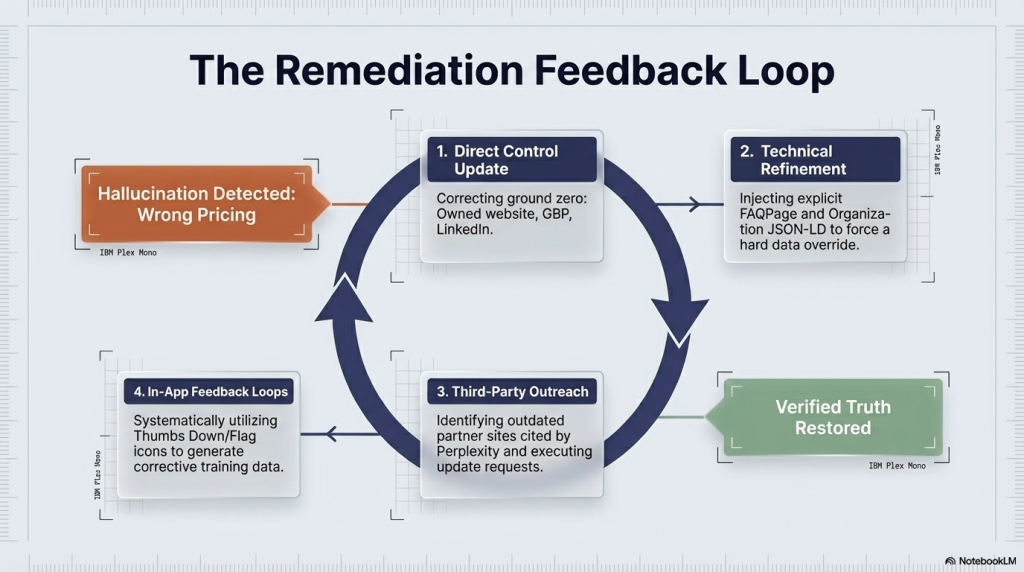
If an audit reveals a hallucination, you must execute a four-level intervention:
- Direct Control: Update facts on your website, LinkedIn, and Google Business Profile.
- Technical Refinement: Use JSON-LD Schema to provide a machine-readable “ground truth.”
- Third-Party Outreach: Correct the source of the hallucination (e.g., outdated blogs or directories cited by Perplexity).
- Feedback Loops: Use interface feedback (thumbs down/flag) to signal errors to the model’s training data.
7. The Technical Tax: Designing for Extraction, Not Just Reading
Answer first: Machine-readable technical infrastructure—specifically JSON-LD Schema and the llms.txt standard—is the only way to ensure AI crawlers interpret your data correctly.
To bridge the gap between human readability and machine extraction, implement the “Answer Capsule Framework.” This means front-loading content to provide immediate, complete answers that AI can “clip” easily.
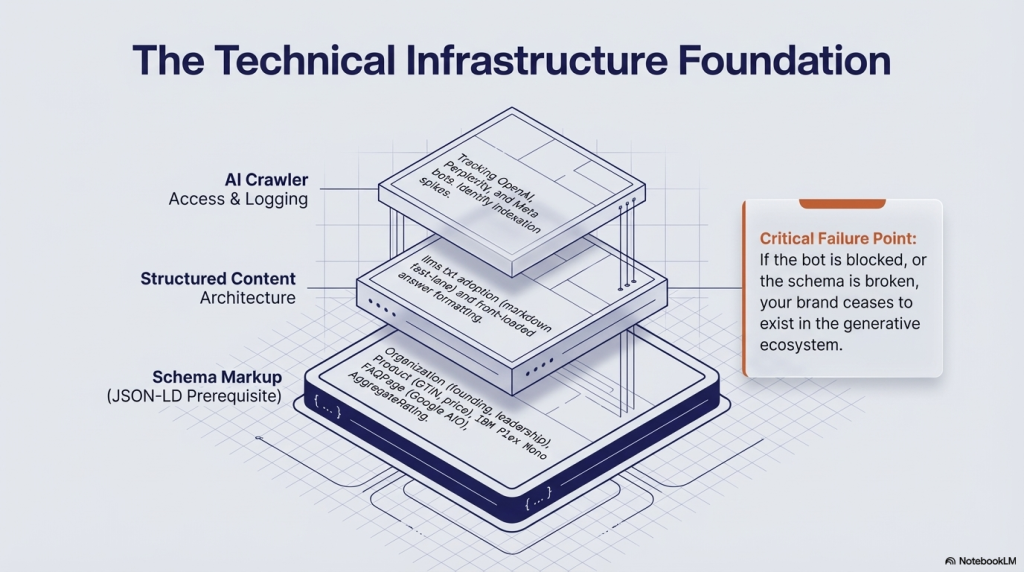
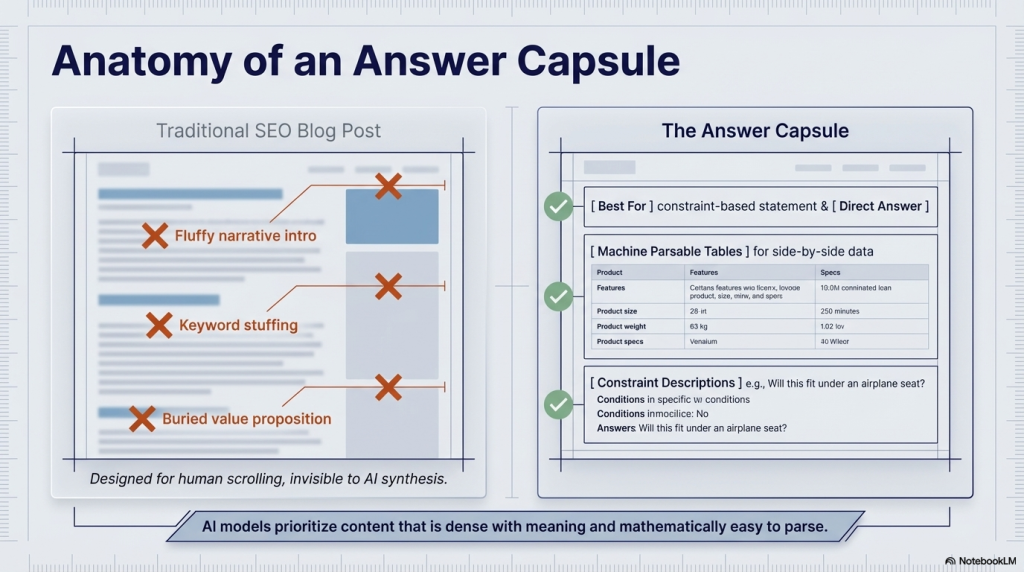
Essential Technical Stack:
- Organization & Product Schema: Defines foundational facts and pricing (GTIN/MPN) for factual parity.
- FAQPage Schema: Maximizes your probability of appearing in Google’s AI Overviews.
- llms.txt: Adopting this standard provides a “fast lane” for AI engines to understand your site’s core mission.
- AI Bot Log Reports: Monitor your server logs (via platforms like Wix AI Visibility) to see how frequently OpenAI or Claude bots are visiting. This is your leading indicator of future visibility.
8. Roadmap to Recommendation: Mastering Agentic Reputation Management
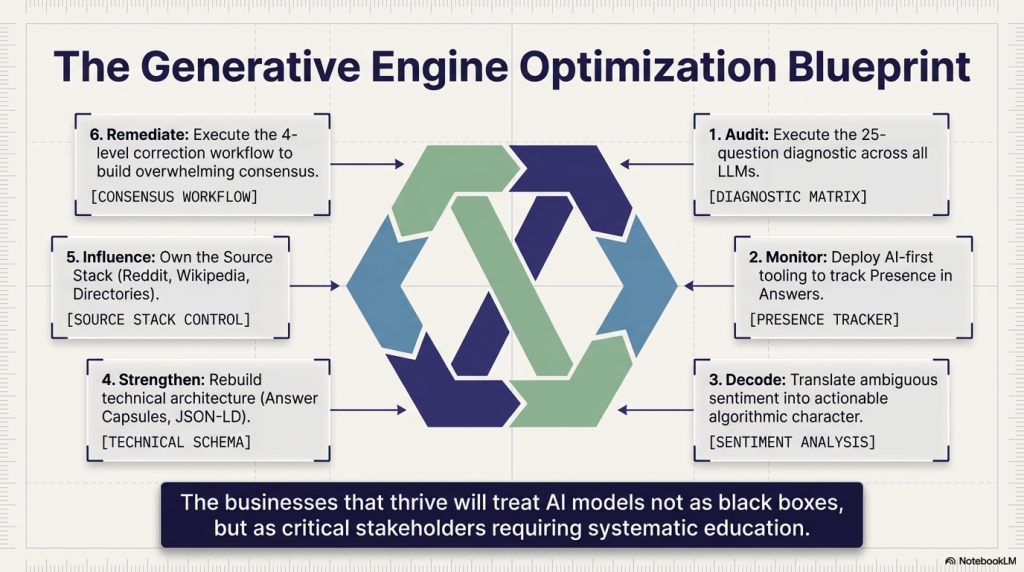
The shift from SEO to GEO (Generative Engine Optimization) requires moving from ranking for keywords to dominating the recommendation layer. As AI agents become the primary “customers” navigating the web, your brand must be data-ready.
The Success Roadmap:
In a world where AI agents are your primary digital laborers, is your brand’s data a solid foundation or a pile of sand? Your reputation depends on the answer.